Red Flags of Persistent Fever
September 24, 2026

Fever is one of the body’s most common responses to infection. It is often temporary and subsides as the underlying illness improves. However, when fever persists, repeatedly returns, becomes unusually high, or is accompanied by other concerning symptoms, it should not be simply treated as a routine viral illness.
For people in and around Siliguri and North Bengal, where a range of infectious illnesses can occur, understanding the warning signs can help ensure timely medical evaluation of the condition.
A temperature of approximately 100.4 °F (38°C) or above is generally considered a fever. However, the duration and pattern of fever are as important as the temperature itself.
What does persistent fever mean?
There is no single definition of “persistent fever” that applies to every situation. In adults, medical evaluation is advisable when a fever lasts for more than 48–72 hours, particularly when it does not improve or is accompanied by other symptoms. Recurrent fever over a longer period also warrants assessment.
It is important to note that
fever is a symptom and not a disease. It can occur with common viral infections, bacterial infections, and several other conditions. Therefore, appropriate treatment depends on identifying the underlying cause.
Red flags you should not ignore
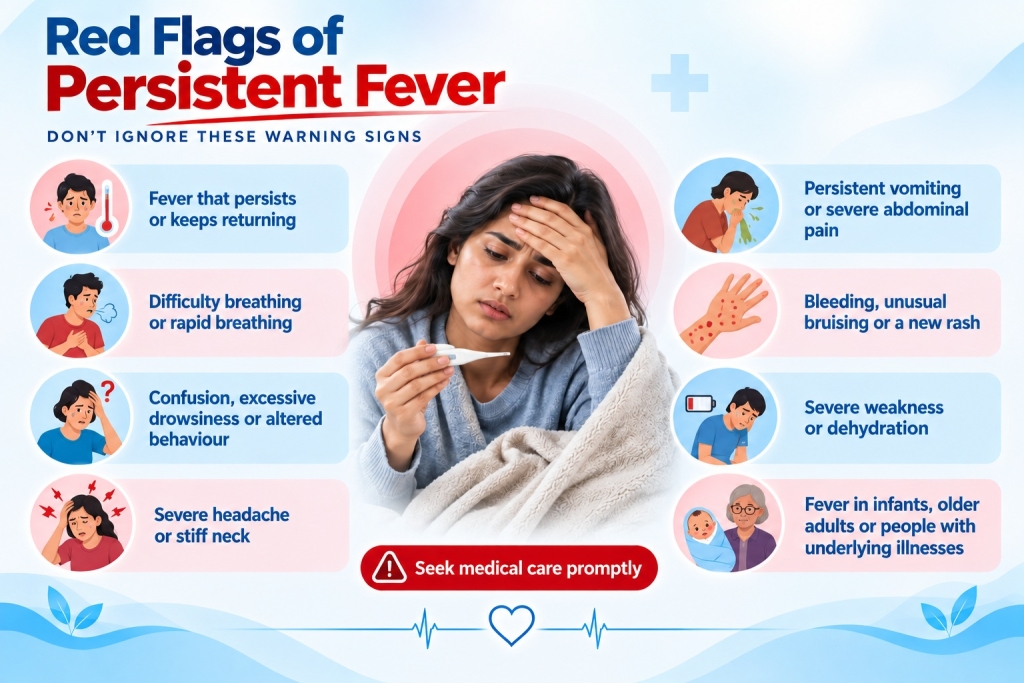
- Fever that persists or keeps returning
A fever that continues for more than a few days despite rest and supportive care should be medically assessed. Similarly, a pattern in which fever settles temporarily and then returns may indicate an infection or another underlying condition that requires investigation.
Do not rely solely on whether the fever temporarily decreases after taking medication. Underlying illnesses may still be present.
- Difficulty breathing or rapid breathing
Fever accompanied by
breathlessness, unusually rapid breathing, or chest discomfort or difficulty breathing requires prompt medical attention. These symptoms may indicate involvement of the lungs or a more serious systemic illness. Difficulty in breathing is recognized as a warning sign that requires urgent assessment.
- Confusion, excessive drowsiness or altered behaviour
If someone with fever becomes confused, unusually sleepy, difficult to wake, disoriented, or less responsive than usual, it should be treated as an emergency warning sign.
Such changes can occur when an infection or other illness significantly affects the body and requires immediate medical assessment.
- Severe headache or stiff neck
Fever associated with a severe headache, stiff neck, confusion, or sensitivity to light should never be ignored. These symptoms can sometimes occur in serious infections involving the nervous system and require urgent evaluation.
- Persistent vomiting or severe abdominal pain
Repeated vomiting, severe abdominal pain, or an inability to keep fluids down alongside fever can lead to dehydration and may also indicate a more significant infection.
These symptoms are particularly important when fever occurs with other warning signs such as weakness, bleeding, or altered consciousness.
- Bleeding, unusual bruising or a new rash
Fever accompanied by bleeding from the nose or gums, blood in vomit or stool, unusual bruising, or a significant new rash requires medical attention. This is particularly relevant in regions where mosquito-borne illnesses, such as dengue, occur. Dengue commonly causes fever, headache, muscle and joint pain, nausea, vomiting, and rash.
Importantly, warning signs of severe dengue can appear as the fever begins to subside, including severe abdominal pain, persistent vomiting, bleeding, rapid breathing, restlessness, and significant weakness. Therefore, just because the temperature drops, it does not necessarily mean that the illness is getting better.
- Severe weakness or dehydration
Fever increases fluid requirements, and vomiting, diarrhoea, or poor oral intake can make dehydration worse, and significant dehydration requires immediate medical evaluation.
Things to watch out for:
- Very little or dark urine
- Excessive thirst
- Dizziness or fainting
- Extreme weakness
- Dry mouth
- Inability to drink adequately
- Fever in infants, older adults or people with underlying illnesses
The threshold for seeking medical advice may be lower in certain groups.
Particular caution is needed for young children, older adults, pregnant women, and people with conditions that weaken immunity, including those receiving cancer treatment or immunosuppressive medicines.
For infants, fever can require a more urgent assessment than that in an otherwise healthy adult.
What causes persistent fever?
The symptoms accompanying fever often provide important clues. A doctor may therefore ask about the duration and pattern of fever, recent travel, mosquito exposure, cough, urinary symptoms, abdominal complaints, medication history, and other associated symptoms.
Persistent fever can have many causes. These may include:
- Viral infections
- Bacterial infections
- Respiratory infections
- Urinary infections
- Gastrointestinal infections
- Mosquito-borne illnesses such as dengue
- Certain infections that require longer evaluation
- Inflammatory or autoimmune conditions
- Certain cancers / other systemic disorders (less common)
Why self-medication can be risky
It might be tempting to take medication repeatedly whenever the temperature rises. However, suppressing fever does not necessarily treat its underlying cause. Antibiotics, in particular, should not be taken without medical advice. Antibiotics are designed to treat specific bacterial infections and are not effective against viral illnesses.
Similarly, medication choices must be carefully considered when illnesses such as dengue are suspected. The World Health Organization advises against the use of aspirin and ibuprofen in suspected dengue cases because they can increase the risk of bleeding.
What should you do if fever persists?
If fever continues for more than two to three days, keeps returning, becomes progressively worse, or is accompanied by any warning signs, consult a doctor rather than continuing home treatment indefinitely.
Depending on the clinical history and examination, the doctor may recommend blood tests, urine tests, imaging, or specific tests for infections, such as dengue. Not every patient requires every test; investigations should be guided by the individual's symptoms and examination findings.
Keeping a simple record can also help your doctor. Periodically note down:
- Temperature readings and timings
- Duration of fever
- Chills or sweating
- Medicines taken
- Associated symptoms
- Recent travel or exposure to mosquitoes
- Any previous medical conditions
When should you visit the emergency department?
Seek urgent medical care if fever is accompanied by difficulty in breathing, confusion, inability to wake, seizures, severe headache with neck stiffness, fainting, severe chest or abdominal pain, significant bleeding, persistent vomiting, or rapidly worsening weakness.
These are not symptoms that should be monitored at home while waiting for the fever to settle.
Expert Opinion
“Fever is often a sign that the body is fighting an infection, but persistent or recurrent fever should not be ignored. If fever continues for several days, keeps returning, or is accompanied by severe weakness, breathing difficulty, confusion, persistent vomiting, rash or dehydration, medical evaluation is important. Finding the underlying cause early can help prevent complications and ensure timely treatment.”
-Consultant General Medicine
-Desun Hospital, Siliguri
At
Desun Hospital, Siliguri, patients with persistent or recurrent fever can seek medical evaluation to identify the possible cause and determine the appropriate course of treatment. A structured assessment is particularly important when fever is prolonged, associated with multiple symptoms, or occurs in a person with underlying health concerns. For residents of Siliguri and North Bengal, recognizing the red flags of persistent fever can help prevent delays in diagnosis and treatment.
A fever is not always dangerous; however, a persistent fever should not be ignored. If it lasts beyond a few days, repeatedly returns, or occurs alongside breathing difficulty, severe headache, confusion, persistent vomiting, abdominal pain, bleeding, dehydration, or extreme weakness, seek medical attention promptly.
Early medical evaluation can help identify the underlying cause and ensure that appropriate treatment is initiated at the right time.
 90 5171 5171