Breathlessness: When Should You Be Concerned
September 20, 2026
Breathing is something we usually do without thinking about it. However, when you suddenly feel that you cannot get enough air, need to breathe faster than usual, or feel unusually short of breath, it can be frightening.
Breathlessness, also known as shortness of breath or dyspnoea, can occur for many reasons. Sometimes, it is a temporary response to strenuous exercise, anxiety, or
respiratory infection. At other times, it may be a sign of an underlying heart, lung, or other medical condition.
The important question is: When should breathlessness be considered serious?
What does breathlessness feel like?
People may describe breathlessness in different ways. Occasional breathlessness after intense physical activity may be normal. However, breathlessness that is new, persistent, worsening, or disproportionate to the activity deserves medical attention.
Symptoms might be:
- Unable to take a deep breath
- Tightness in the chest
- A need to breathe faster
- Difficulty breathing while lying down
- Breathlessness after minimal activity
- A feeling that you are “not getting enough air”
- Unusual tiredness associated with breathing difficulty
Common causes of breathlessness
Breathlessness can originate from the lungs, heart, or other systems of the body.
Heart-related conditions can also cause breathlessness, particularly when it occurs during physical activity or while lying down. Sometimes, breathlessness may be caused by more than one condition.
Common causes include:
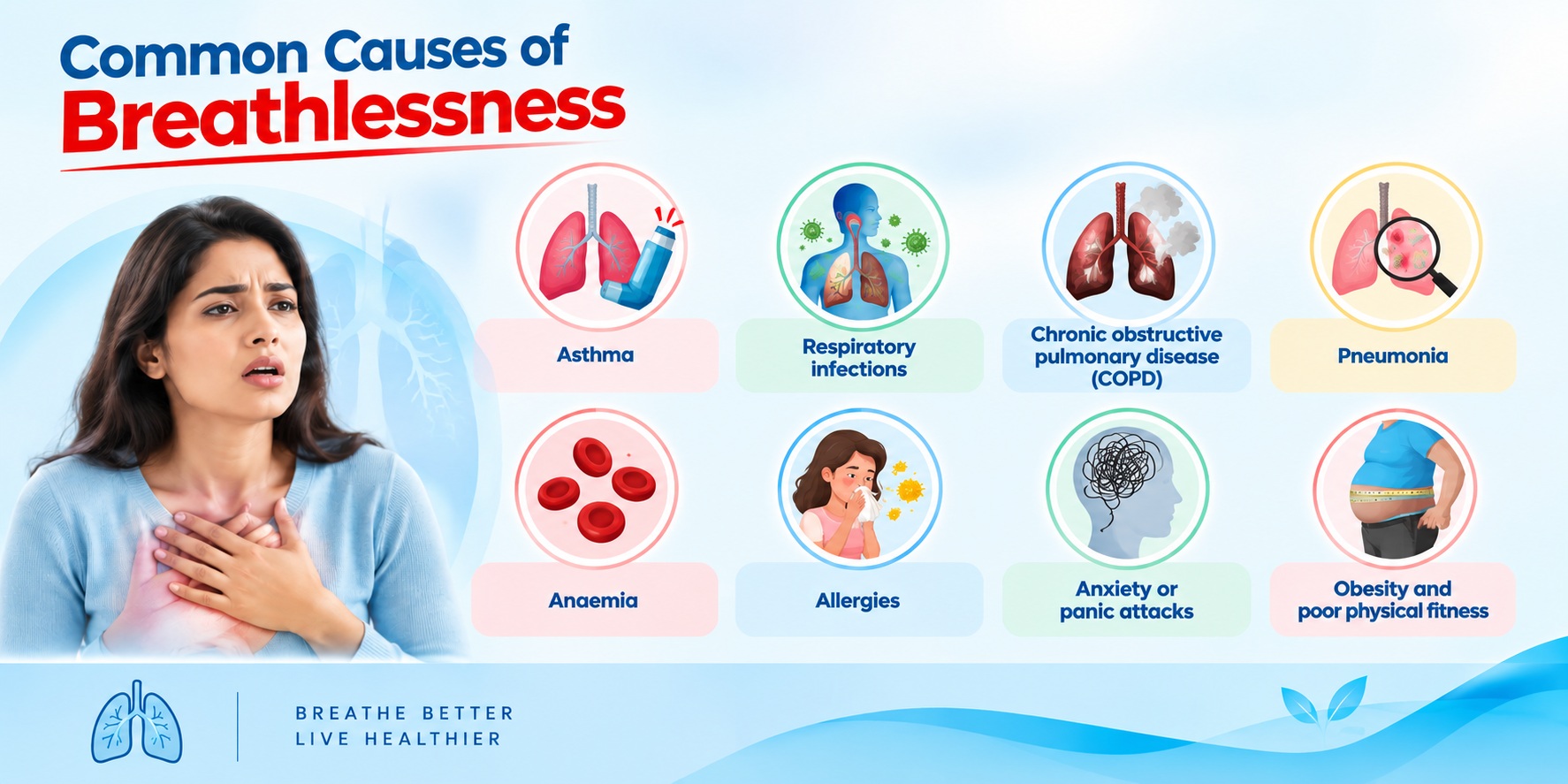
- Asthma
- Respiratory infections
- Chronic obstructive pulmonary disease (COPD)
- Pneumonia
- Anaemia
- Allergies
- Anxiety or panic attacks
- Obesity and poor physical fitness
When should you be concerned?
One of the most important warning signs is breathlessness that is new or suddenly becomes worse. Severe difficulty in breathing and breathlessness associated with chest discomfort or sudden confusion can require emergency assessment.
Seek urgent medical attention if breathlessness is accompanied by the following:
- Severe difficulty breathing
- Gasping or inability to speak normally because of breathlessness
- Chest pain, pressure or heaviness
- Pain spreading to the arm, back, neck or jaw
- Bluish, grey or unusually pale lips or skin
- Sudden confusion or reduced alertness
- Fainting or severe dizziness
Breathlessness during everyday activities
Breathlessness should not be ignored, even if it is not severe. If you previously walked comfortably but now become breathless after walking a short distance, climbing a few stairs, or performing routine household activities, it is worth discussing with a doctor.
Similarly, breathlessness that repeatedly wakes you at night or becomes worse when lying down needs evaluation. Do not assume that it is “just weakness.” Many people attribute breathlessness and fatigue to stress, lack of sleep, or ageing. Although these factors can contribute, persistent symptoms may have an underlying medical cause.
For example, anaemia can cause tiredness and breathlessness, while respiratory illnesses can affect the body's ability to obtain adequate oxygen. A doctor may therefore ask about your symptoms, medical history, medications, smoking or tobacco exposure, allergies, and recent infections before deciding whether further tests are necessary.
What tests are required?
There is no single test for breathlessness, and the objective is not simply to treat the symptom but to identify its cause. Depending on the symptoms, a doctor may recommend:
- Blood tests
- Chest X-ray or other imaging
- ECG
- Echocardiography
- Pulmonary function tests
- Oxygen saturation measurement
- Other investigations based on the clinical examination
What should you do if you experience sudden breathlessness?
Do not try to “push through” severe breathlessness. Stop the activity and sit in a comfortable position. If the breathing difficulty is severe, sudden, or accompanied by chest pain, fainting, confusion, or bluish lips, seek emergency medical care immediately. For less severe but persistent symptoms, arrange a medical consultation rather than repeatedly self-medicating.
Expert Opinion
“Breathlessness after strenuous activity may be normal, but unexplained, persistent or worsening breathlessness should not be ignored. It can be linked to lung or heart conditions, asthma, infections or other health issues. Sudden severe breathlessness, especially with chest pain, dizziness, bluish lips or fainting, requires immediate medical attention. Early evaluation can help identify the cause and ensure timely treatment.”
-Consultant Pulmonologist
-Desun Hospital, Siliguri
Breathlessness: Listen to your body
Breathlessness is a symptom with many possible causes. Although it may sometimes be harmless and temporary, a new, persistent, or worsening change in breathing should not be dismissed.
At
Desun Hospital, Siliguri, patients experiencing unexplained or persistent breathlessness can seek medical evaluation to understand the possible causes and determine the appropriate course of care.
 90 5171 5171