Vertigo and Dizziness: Understanding the causes behind the spinning sensation
September 26, 2026

Have you ever felt that the room was spinning when you turned your head, got out of bed or suddenly changed position?
You may have experienced vertigo.
Although the words “dizziness” and “vertigo are often used interchangeably, they do not always mean the same thing. Dizziness can describe light-headedness, imbalance or a feeling of being faint, while vertigo specifically refers to a sensation of movement, often as though you or your surroundings are spinning.
What causes vertigo?
Vertigo can have several causes, many of which involve the inner ear, which plays an important role in maintaining balance. The inner ear contains structures that help the brain understand the body's position and movement. When these systems are disturbed, a person may experience vertigo.
Common causes include:
Benign paroxysmal positional vertigo (BPPV): BPPV is one of the common causes of vertigo. It typically occurs when certain movements of the head, such as turning in bed, looking upwards or getting up, may trigger a brief spinning sensation.
Inner-ear inflammation: Conditions such as labyrinthitis and vestibular neuritis can cause vertigo, sometimes following a viral illness.
Ménière’s disease: This condition can cause episodes of vertigo along with symptoms such as ringing in the ear (tinnitus), hearing changes or a feeling of fullness in the ear.
Migraine: Some people experience vertigo or dizziness as part of migraine-related symptoms, even when a typical headache is absent.
Certain medicines and other neurological conditions may also cause dizziness or balance problems.
Vertigo is not always an ear problem
Although inner-ear disorders are common causes, not every episode of dizziness originates in the ear, so, recurrent or unexplained dizziness should be medically assessed. Dizziness may also be associated with:
- Low blood pressure
- Dehydration
- Low blood sugar
- Anaemia
- Medication side effects
- Migraine
- Neurological conditions
When should you be concerned?
Occasional, brief vertigo triggered by a particular head movement may have a relatively straightforward cause. However, seek urgent medical attention if dizziness or vertigo is accompanied by:
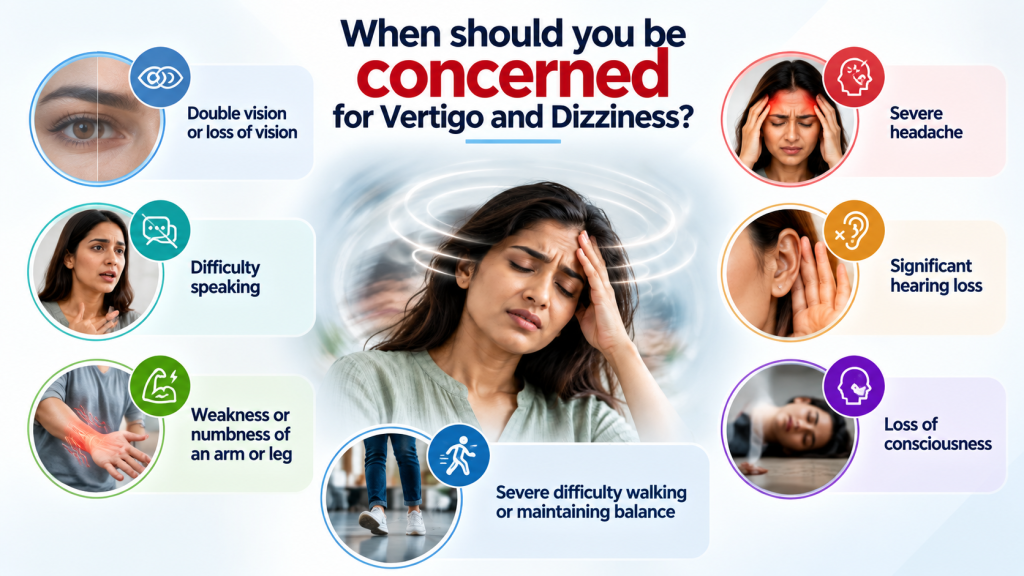
- Double vision or loss of vision
- Difficulty speaking
- Weakness or numbness of an arm or leg
- Severe headache
- Significant hearing loss
- Loss of consciousness
- Severe difficulty walking or maintaining balance
These symptoms can sometimes indicate a serious neurological or other medical problem and require urgent assessment.
What should you do during an episode?
If you suddenly feel that the room is spinning:
- Sit or lie down somewhere safe.
- Avoid sudden head movements.
- Do not drive.
- Get assistance if you are at risk of falling.
- Drink fluids if dehydration may be contributing and you can safely drink.
- Avoid climbing stairs or operating machinery until the episode has passed.
If episodes keep returning, consult a doctor rather than repeatedly treating yourself.
How is vertigo diagnosed?
Diagnosis begins with a detailed history. Your doctor may ask when the dizziness began, how long each episode lasts, if a particular head movement triggers it, if there is any loss of hearing or ringing in the ears, if you have suffered an infection recently, if you experience headaches, if you are you taking any medicines, or if you have experienced weakness, numbness or changes in speech. Depending on the symptoms, examination may include balance and eye-movement assessment and, where appropriate, further investigations or referral to a specialist.
Can vertigo be treated?
Treatment depends on the underlying cause. For some people with positional vertigo, specific physical manoeuvres or balance exercises may help. Other causes may require medicines, treatment of an underlying infection or specialist management. The important point is that there is no single treatment for all forms of dizziness.
Preventing falls during vertigo
For older adults and people with recurrent balance problems, fall prevention is particularly important. Keep pathways clear, use adequate lighting and avoid walking unaided during an active episode if you feel unstable.
Expert Opinion
“Vertigo is more than just feeling dizzy; it often creates a sensation that you or your surroundings are spinning. It can be caused by inner-ear problems, migraine, certain medications or other underlying conditions. Recurrent or sudden vertigo, especially when accompanied by hearing loss, severe headache, weakness or difficulty speaking, should not be ignored. Proper evaluation can help identify the cause and guide appropriate treatment.”
-Consultant ENT Specialist
-Desun Hospital, Siliguri
Don’t ignore recurrent dizziness
If vertigo keeps returning, does not settle or is affecting your daily activities, arrange a
ENT specialist consultation. International guidelines recommends medical evaluation for vertigo that does not go away or repeatedly returns.
Pay attention to how the dizziness begins, what triggers it and whether other symptoms occur. If vertigo is accompanied by weakness, numbness, speech difficulty, visual disturbance, severe headache or significant hearing loss, seek urgent medical attention. While not every spinning sensation means a serious illness, not every episode should be ignored either.
At
Desun Hospital, Siliguri, patients experiencing recurrent dizziness or vertigo can undergo clinical evaluation to help identify the possible cause and determine appropriate management.
 90 5171 5171