Redefining Possibilities in Cardiac Care: First Leadless Pacemaker Implantation at Desun Hospital, Siliguri
September 16, 2026
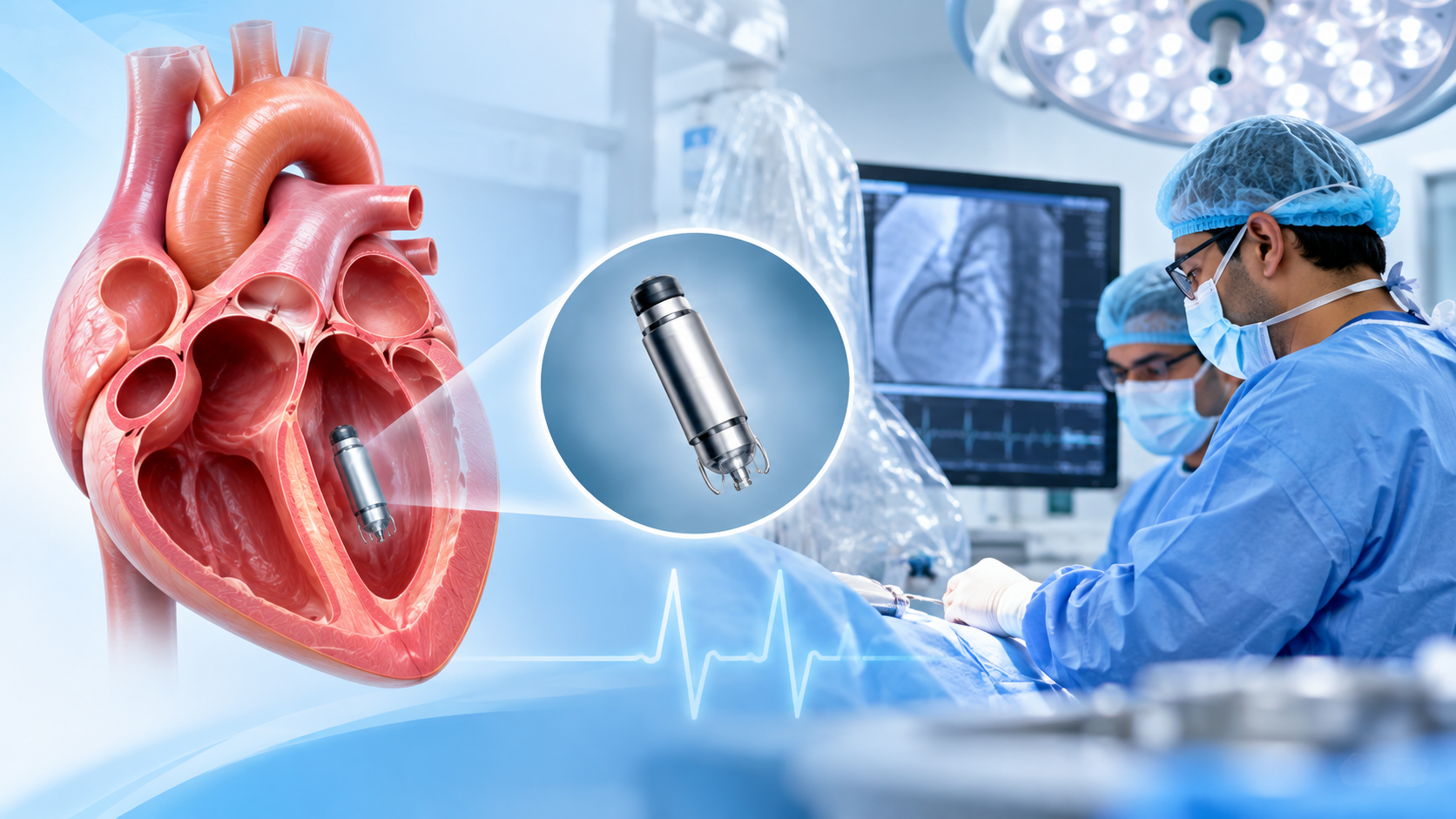
Desun Hospital, Siliguri has marked a significant milestone in
advanced cardiac care with the successful implantation of its first leadless pacemaker—bringing a modern, minimally invasive treatment option to patients in North Bengal.desunsiliguri+1
On 24 June 2026, Mr. Swapan Kr Choudhary, a high-risk patient with multiple comorbidities, underwent this cutting-edge procedure successfully, underscoring how technology and expertise can expand safe treatment options even for complex cases.
Pacemakers are life-saving devices used to regulate abnormal heart rhythms. While traditional pacemakers have served patients well for decades, they typically require a small surgical pocket under the skin of the chest and transvenous leads (wires) that travel into the heart.
A leadless pacemaker is a compact, self-contained device implanted directly inside the heart via a minimally invasive catheter-based approach through the groin. This eliminates the need for a chest incision, a subcutaneous pocket, and conventional pacing leads.
With this achievement, Desun Hospital, Siliguri reinforces its commitment to delivering advanced, evidence-based cardiac therapies closer to home for patients across the region.
Case Spotlight: High-Risk Patient, Modern Solution
Mr. Swapan Kr Choudhary presented with multiple health challenges that made him a high-risk candidate for conventional pacemaker surgery. For such patients, avoiding a chest pocket and transvenous leads can meaningfully reduce the risk of complications like infection, lead dislodgement, and pocket-related issues.
The leadless approach offered a precise, minimally invasive alternative, enabling the team to address his cardiac condition with advanced technology while prioritizing safety and faster recovery.
Expertise Meets Advanced Technology
The procedure was performed by Dr. Kailash Kr. Goyal, Consultant Cardiologist at Desun Hospital, Siliguri, whose experience spans conventional and interventional cardiology.
Successful outcomes in complex cardiac care depend on three pillars: specialized clinical expertise, modern imaging and catheter-lab infrastructure, and access to evolving device technologies. This case exemplifies how their combination can expand options for patients who may not be ideal candidates for traditional systems.
What Makes a Leadless Pacemaker Different?
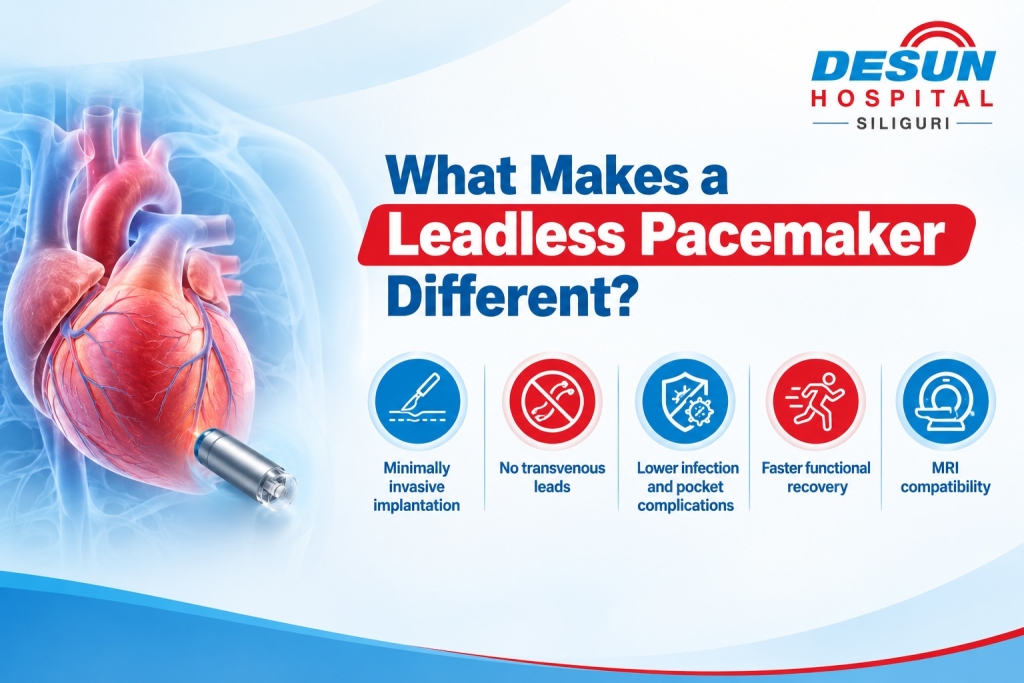 Leadless pacemakers differ from traditional systems in design and implantation route, which translates into distinct clinical trade-offs.
- Minimally invasive implantation: Delivered via a catheter through the femoral vein; no chest incision or device pocket.
- No transvenous leads: Eliminates lead-related complications such as fracture, dislodgement, insulation breach, and venous obstruction.
- Lower infection and pocket complications: By avoiding a subcutaneous pocket and arm/shoulder involvement, risks like pocket hematoma, infection, and shoulder restriction are reduced.
- Faster functional recovery: Many patients resume routine activities sooner, with fewer movement restrictions in the immediate post-procedure period.
- MRI compatibility: Modern leadless systems are designed to be MRI-safe, supporting future diagnostic needs.
Important considerations: Traditional pacemakers remain highly versatile (single/dual/chamber pacing, CRT for heart failure) and are often more affordable. Device suitability depends on the patient’s rhythm diagnosis, anatomy, and long-term pacing needs.
Advancing Cardiac Care in Siliguri
The successful leadless pacemaker implantation is an important step in the evolution of cardiac services at Desun Hospital, Siliguri—aligning with its focus on innovation, technology, and specialist-driven care.
For patients in North Bengal, this means access to contemporary, minimally invasive therapies without the need to travel far for advanced interventions.
Frequently Asked Questions
Who is the candidate for a leadless pacemaker?
Typically, patients who need single-chamber pacing and are at higher risk for lead or pocket complications may benefit. Final eligibility is decided after detailed cardiac evaluation.
How is it implanted?
Through a small puncture in the groin, a catheter delivers the device into the heart under imaging guidance. There is no chest incision.
What are the main advantages?
Fewer lead/pocket-related complications, no visible chest scar or lump, potentially quicker recovery, and MRI compatibility.
Are there any limitations?
Yes. Traditional systems still offer broader pacing options (dual-chamber, CRT) and easier generator replacement. The right choice depends on individual clinical needs.




 90 5171 5171