Enjoying Festive Treats: How to Prevent Acidity, Bloating and Food Poisoning
October 12, 2026

Festivals in West Bengal are synonymous with delicious food, elaborate meals, sweets and family gatherings. From spicy
chaats and fried snacks to rich gravies and traditional desserts, festive celebrations offer plenty of opportunities to indulge. However, enjoying too much of a good thing can sometimes leave you dealing with acidity, bloating, indigestion or even food poisoning.
Changes in eating habits, irregular meal timings, overeating and consuming food that has not been stored or prepared properly can put additional stress on your digestive system. With a few sensible precautions, you can enjoy the festive season without compromising your digestive health.
Why do digestive problems increase during festivals?
During festivals, people often eat more frequently and consume larger portions than usual. Rich, oily, spicy and sugary foods can trigger digestive discomfort, particularly in people who already experience acidity or gastrointestinal problems.
Some common reasons include:
- Overeating: Large meals can increase stomach pressure and trigger acid reflux
- Excessive consumption of fried food: High-fat foods may slow digestion and aggravate discomfort in some people
- Irregular meal timings: Skipping meals and then eating heavily can contribute to indigestion
- Excessive consumption of sweets and sugary drinks: Excessive sugar can cause digestive discomfort in some individuals.
- Unsafe food handling: Contaminated food, improper refrigeration and inadequate cooking can cause foodborne infections
Acidity, bloating or food poisoning: Know the difference
Although all these conditions seem to have overlapping symptoms, they are not the same.
Acidity and acid reflux: You may experience a burning sensation in the chest or upper abdomen, sour belching, an unpleasant taste in the mouth or discomfort after meals, symptoms that may worsen when you lie down soon after eating
Bloating and indigestion: These commonly cause abdominal fullness, excessive gas, belching and discomfort after meals, usually triggered by eating too quickly, consuming large portions, and certain types of food
Food poisoning: This generally occurs after consuming contaminated food or water, with symptoms including nausea, vomiting, diarrhoea, abdominal cramps and fever, which may develop within hours or take longer to appear, depending on the infection
Seven ways to protect your digestive health this festive season
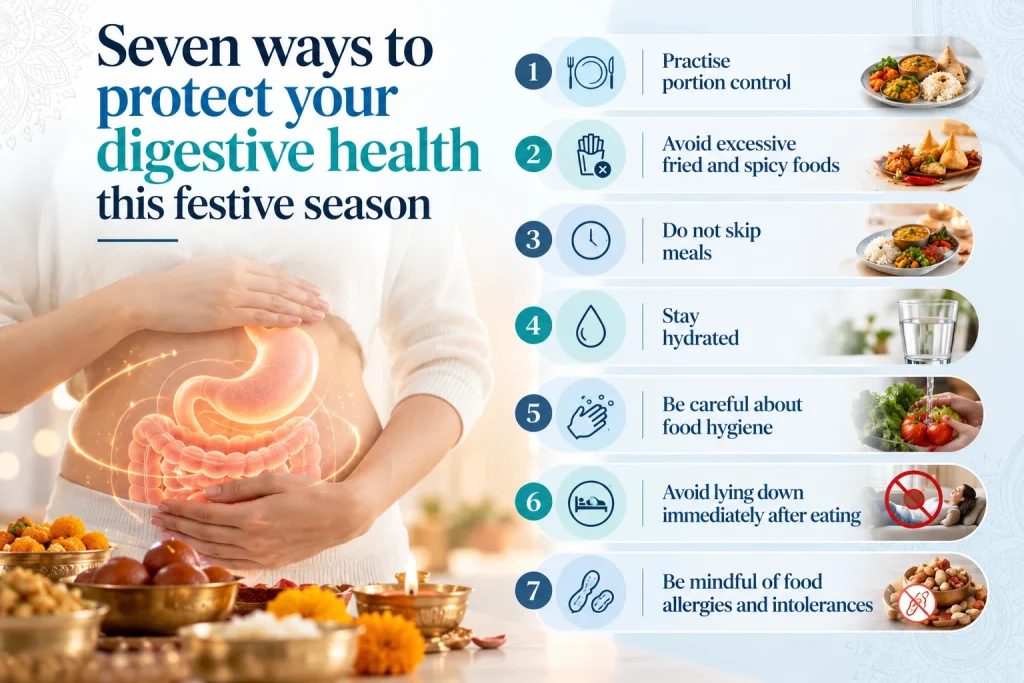
- Practise portion control: You do not have to avoid your favourite festive dishes. Instead, enjoy smaller portions and avoid filling your plate repeatedly. Eating slowly also gives your body time to recognise when you are full.
- Avoid excessive fried and spicy foods: Samosas, kachoris, pakoras and rich gravies are tempting, but excessive consumption may aggravate acidity and indigestion. Balance these treats with lighter meals containing vegetables, fruits and adequate fibre.
- Do not skip meals: Skipping breakfast or lunch to compensate for a large festive dinner can encourage overeating later. Maintain reasonably regular meal timings and avoid going to celebrations extremely hungry.
- Stay hydrated: Drink adequate water throughout the day. Limit excessive consumption of carbonated beverages and sugary drinks, particularly if they make you feel bloated.
- Be careful about food hygiene: Food safety is particularly important during large gatherings and community celebrations. The basic food safety principles are to clean, separate, cook and chill. Perishable foods should generally not remain at room temperature for more than two hours, or one hour when the temperature exceeds 32°C.
In order to avoid health issues, please follow these precautions:
- Wash your hands before handling or eating food
- Choose freshly prepared meals from hygienic establishments
- Avoid uncovered food exposed to dust, insects and prolonged outdoor temperatures
- Ensure that meat, seafood and eggs are thoroughly cooked
- Avoid unpasteurised milk and products made from it
- Refrigerate perishable food promptly
- Keep raw and cooked foods separate to prevent cross-contamination
- Avoid lying down immediately after eating: Give yourself time after a meal before going to bed. A gentle walk after eating may also help you avoid prolonged inactivity and excessive post-meal discomfort.
- Be mindful of food allergies and intolerances: Certain foods, including dairy products, wheat and specific ingredients, may trigger digestive symptoms in susceptible individuals. If you repeatedly experience bloating, diarrhoea or abdominal discomfort after consuming a particular food, consult a doctor rather than eliminating multiple food groups without guidance.
What should you do if you develop food poisoning?
Most mild episodes improve with supportive care, but replacing lost fluids and electrolytes is essential. Drink water or an appropriate oral rehydration solution (ORS), particularly if you have diarrhoea or vomiting. Take small, frequent sips if you feel nauseated.
Seek medical attention if you experience persistent vomiting, bloody diarrhoea, high fever, severe abdominal pain or signs of dehydration such as dizziness, very little urine or excessive weakness. Older adults, young children,
pregnant women and people with weakened immunity may need particular attention.
When should you consult a Gastroenterologist?
Occasional indigestion after a heavy meal may not be a cause for concern. However, frequent acidity, persistent bloating, recurring abdominal pain, difficulty swallowing, unexplained weight loss or changes in bowel habits require medical evaluation.
Chest pain should never automatically be dismissed as acidity, particularly when accompanied by breathlessness, sweating or pain spreading to the arm or jaw. Seek emergency medical attention.
Expert Opinion
“Festive celebrations often involve rich, oily and spicy foods, irregular meal timings and eating outside, which can trigger acidity, bloating and digestive discomfort. Consuming contaminated or improperly stored food can also lead to food poisoning. Eating smaller portions, staying hydrated, maintaining food hygiene and avoiding excessive oily and spicy meals can help prevent digestive problems. Persistent abdominal pain, repeated vomiting, diarrhoea or signs of dehydration should not be ignored, as timely medical attention may be necessary.”
Celebrate without compromising your health
Festive food is an important part of India's cultural traditions, and enjoying it should not come at the expense of your well-being. Sensible portions, good food hygiene, adequate hydration and regular meal timings can help prevent many common digestive problems.
At
Desun Hospital, Siliguri, patients can consult
experienced specialists for gastrointestinal concerns, digestive disorders and persistent symptoms requiring medical attention.
Remember, a healthy festive season is one where you enjoy the celebrations while taking care of your digestive health.
 90 5171 5171