Breast Lump or Just a Cyst? How to Spot the Early Signs of Breast Cancer
October 8, 2026

Discovering a lump in your breast can be frightening. The first thought for many women is, “Could this be breast cancer?” But a breast lump does not automatically mean cancer. In fact, most breast lumps are benign, meaning they are not cancerous. Cysts, fibroadenomas, hormonal changes, infections and other non-cancerous conditions can all cause changes in breast tissue.
The important thing, however, is not to ignore a new or unusual breast change. Understanding what may cause a lump, recognise warning signs and seek timely medical evaluation can make a significant difference.
What exactly is a breast lump?
A breast lump is an area of breast tissue that feels different from the surrounding tissue. It may feel soft or firm, smooth or irregular, movable or relatively fixed. Some lumps may be painful, while others may cause no discomfort at all.
The way a lump feel cannot by itself determine whether it is cancerous. Even breast cancers can sometimes be soft, rounded or painful, while many harmless lumps can feel firm. This is why it is important to have a new, persistent or concerning lump examined by a healthcare professional rather than trying to diagnose it by touch alone.
Breast cyst or cancer: What could be causing the lump?
Breast cysts: A breast cyst is a fluid-filled sac within the breast. Cysts are generally benign and are particularly common during the years when women are still menstruating. They may feel smooth, round or oval and can sometimes be tender, particularly around the menstrual cycle. Ultrasound is often useful for determining whether a breast lump is fluid-filled or solid. Simple cysts generally do not require a biopsy.
Fibroadenoma: Fibroadenomas are common benign breast tumours, particularly among younger women. They are often firm, smooth and mobile and may change in size over time. Although fibroadenomas are usually harmless, a doctor may recommend imaging or follow-up depending on the person's age, symptoms and characteristics of the lump.
Hormonal breast changes: Breast tissue can change during the menstrual cycle, pregnancy, breastfeeding and around menopause. Hormonal fluctuations may make breasts feel more swollen, tender or lumpy. A change that appears to be related to the menstrual cycle may settle afterwards. However, a lump that persists or is different from your usual breast pattern should still be assessed.
Infection or inflammation: Mastitis and breast abscesses can cause swelling, pain, warmth and redness. These conditions may occur during breastfeeding but can also occur in other circumstances. Fever, increasing redness, severe tenderness or a rapidly developing swelling warrants prompt medical attention.
Breast cancer: Breast cancer occurs when abnormal cells in the breast grow uncontrollably. A new lump or thickening can be an early sign, but breast cancer can also present with other changes, and sometimes there may be no obvious lump at all.
Early warning signs of breast cancer
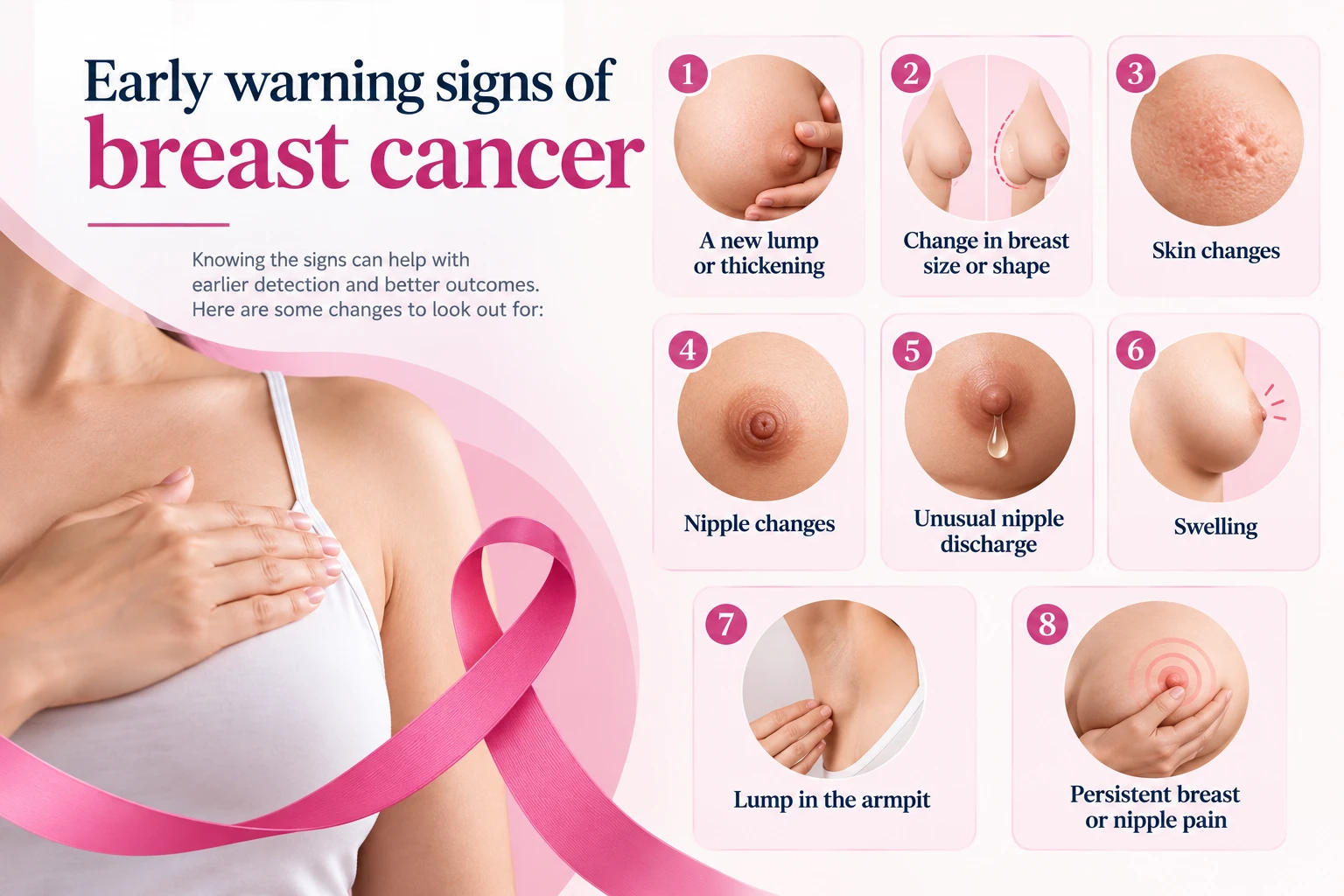
Knowing what is normal for your breasts can help you notice changes that need medical attention. Although having one of these symptoms does not mean that you have cancer, as several benign conditions can cause similar changes, it is important that you should watch out in case of:
A new lump or thickening: Particularly if it persists or feels different from the surrounding breast tissue.
Change in breast size or shape: A new difference between the breasts should be evaluated.
Skin changes: Dimpling, puckering, thickening, redness or a texture resembling an orange peel can be warning signs.
Nipple changes: A newly inverted nipple, change in its position or unusual changes around the nipple should not be ignored.
Unusual nipple discharge: Discharge that occurs without squeezing the nipple, particularly bloody or abnormal discharge, requires assessment.
Swelling: Swelling of part or all of the breast, even when no distinct lump can be felt, can sometimes be a sign of breast cancer.
Lump in the armpit: Enlarged lymph nodes under the arm or near the collarbone can sometimes accompany breast cancer.
Persistent breast or nipple pain: Pain is not usually the most typical presentation of breast cancer, but persistent or unexplained pain should still be discussed with a doctor.
Can you tell if a lump is cancerous by touching it?
No. There are common beliefs that a cancerous lump is always hard, painless and immovable, while a benign lump is always soft and movable. These descriptions are not reliable enough to make a diagnosis. A cancerous lump can have different characteristics, and benign breast conditions can sometimes feel concerning. So, it’s important not to wait for a lump to become painful or to assume that a painless lump is harmless.
How is a breast lump evaluated?
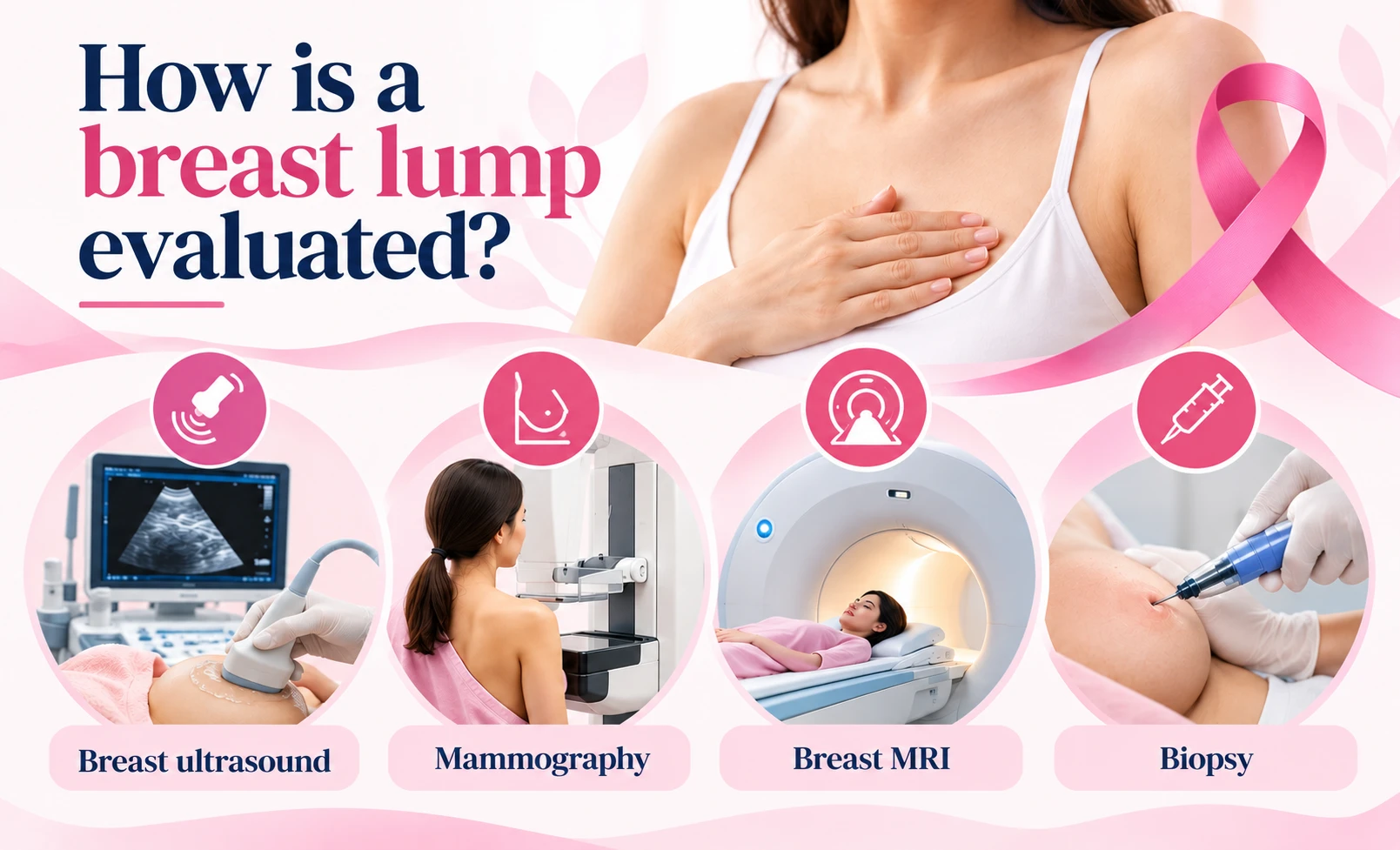
When you report a breast lump or other breast change, your doctor may begin with a clinical examination and review your medical and family history.
Depending on your age, symptoms and examination findings, investigations may include:
- Breast ultrasound, which is particularly useful for determining whether a lump is fluid-filled or solid
- Mammography is an X-ray examination that can detect certain breast cancers, sometimes before a lump can be felt
- Breast MRI is used in selected situations, particularly for certain higher-risk patients or when additional imaging is required
- Biopsy is the removal of a small tissue sample for laboratory examination when an abnormality needs definitive diagnosis. This is the test used to determine with certainty whether a suspicious abnormal area is cancerous
Don’t wait for pain
One of the most important misconceptions about breast cancer is that it must hurt. Breast cancer may be painless, particularly in its early stages. WHO advises people with an abnormal breast lump to seek medical care even when the lump does not hurt.
At the same time, pain does not automatically mean cancer. Many benign breast conditions can cause tenderness or pain. The message is simple: don’t use pain, or the absence of it, as a way to decide whether a breast change is serious.
Who should be particularly attentive?
Breast cancer can occur in women without a known family history. WHO notes that most women diagnosed with breast cancer do not have a known family history of the disease. Risk can increase with factors such as increasing age, family history, certain inherited gene mutations, previous radiation exposure, obesity, alcohol use and some reproductive or hormonal factors. Women with a strong family history or known genetic risk may require a personalised screening plan and should discuss their risk with a healthcare professional.
What about breast self-examination?
Rather than relying on a rigid monthly self-examination routine as a substitute for screening, women should become familiar with how their breasts normally look and feel. Notice changes while bathing, dressing or during everyday activities. If something feels or looks different and does not seem normal for you, consult a healthcare professional. Breast awareness does not replace recommended screening. Screening and early diagnosis work together to help identify breast cancer earlier.
When should you see a doctor?
Do not wait for the next routine check-up if you notice a new, unusual change. Make an appointment if you notice any of these symptoms:
- A new lump or thickening
- A lump that persists or increases in size
- New changes in breast shape or size
- Skin dimpling, puckering or unusual thickening
- A newly inverted nipple
- Unusual or bloody nipple discharge
- Persistent swelling or redness
- An unexplained lump in the armpit
- Any breast change that concerns you
Expert Opinion
Not every breast lump is cancerous, but knowing the difference between a harmless cyst and a potentially suspicious lump is essential. Understand the warning signs of breast cancer, the role of diagnostic tests, and why timely medical evaluation is crucial for early detection and better treatment outcomes.
- Consultant Breast Surgeon
- Desun Hospital, Siliguri
Early detection can make a difference
A breast lump can be alarming, but it is important not to panic. It is and equally important not to dismiss it. Most breast lumps are not cancer. But every new or unusual breast change deserves appropriate evaluation. Breast cancer detected at an earlier stage is generally more amenable to treatment, which is why awareness, timely medical evaluation and appropriate screening are important components of breast health.
A simple message for every woman
Know what is normal for you. Notice what changes. Don’t self-diagnose. And don't delay getting a new breast lump or unusual breast change checked.
At
Desun Hospital, Siliguri, women can consult qualified specialists for evaluation of breast lumps, breast pain and other breast-related concerns, with appropriate diagnostic investigations and further management when required.
 90 5171 5171